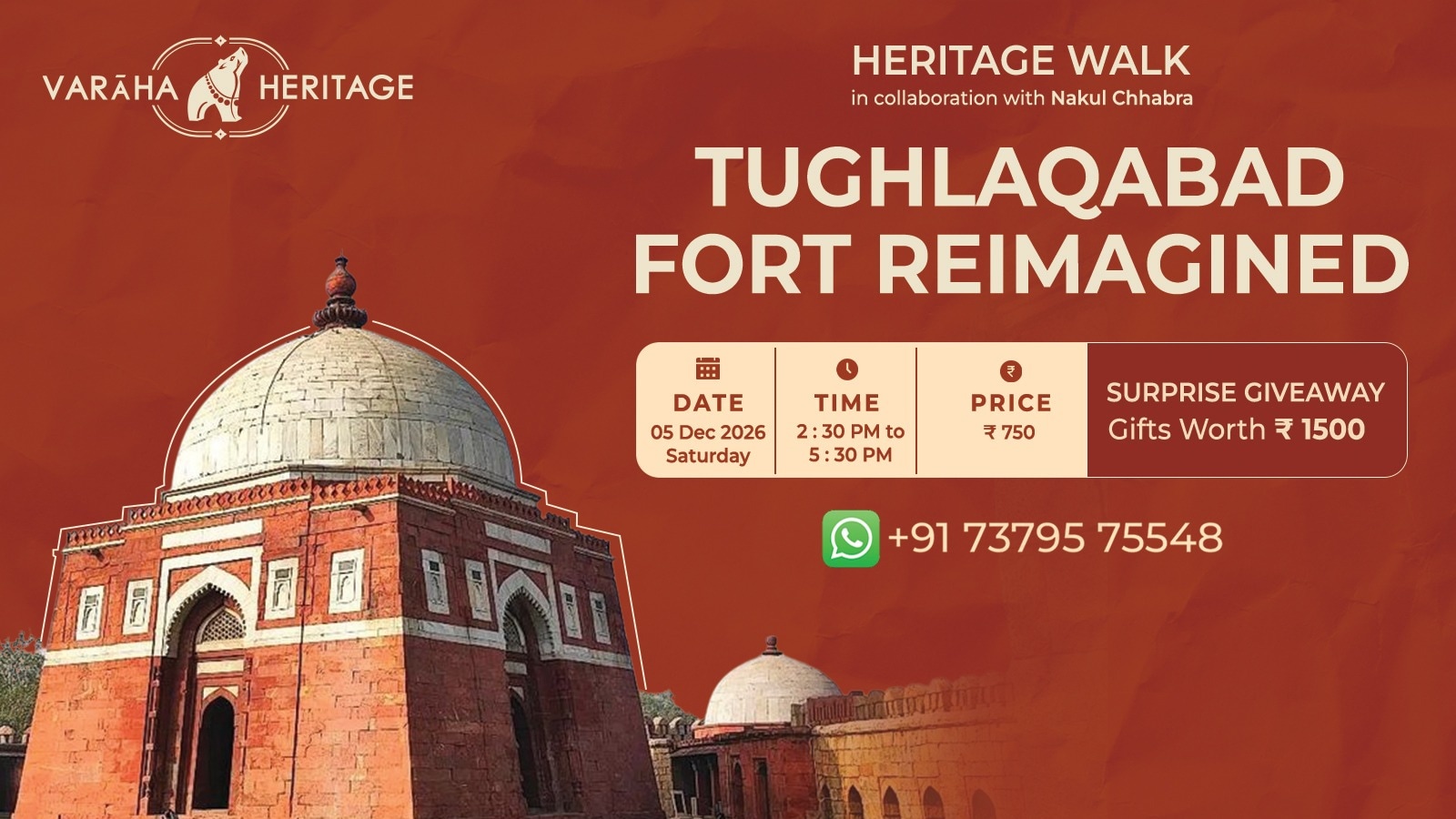
What does a city built in the shadow of Mongol invasions look like? Tughlaqabad was Ghiyasuddin Tughlaq's answer.
Built in the 14th century, this enormous fortified city was designed not merely as a royal residence but as a formidable political and military stronghold. Its massive stone walls, bastions and rugged ruins still convey the scale and ambition of the Tughlaq dynasty, even though the city now lies largely abandoned.
On this walk, we'll trace the rise of the Tughlaqs and the making of Tughlaqabad, exploring its strategic location and defensive architecture, residential quarters, citadel, mosque, granary and market spaces.
We'll also uncover the story behind the city's abandonment and its famous association with the curse of Nizamuddin Auliya.
Beyond Ghiyasuddin, we'll step into the world of his successor, Muhammad bin Tughlaq, the controversial ruler often remembered as the "Eccentric Prince." Through the writings of the Moroccan traveller Ibn Battuta, who served at his court, we'll glimpse the political life, ambitions and contradictions of 14th-century Delhi.
This is a walk through ruins, but more importantly, a journey into the political world that created them.
Good to Know:
Meeting Point: Ticket counter, Tughlaqabad Fort
Entry Ticket: ASI monument entry ticket is not included and must be purchased on-site.
Hosted by: Varaha Heritage Walks in collaboration with History Beyond Books (Nakul Chhabra).
Entry allowed for ages 12 and above
Tickets required for ages 12 and above
All pets are welcome at the venue
Session conducted in Hinglish, English, Hindi, Urdu