Keshava Temple Somanathpur

Mon, 23 Nov – Tue, 1 Dec, Multiple slots
Keshava Temple, Somanathapura
star4.8•platform
100 ratings

About the venue

+1

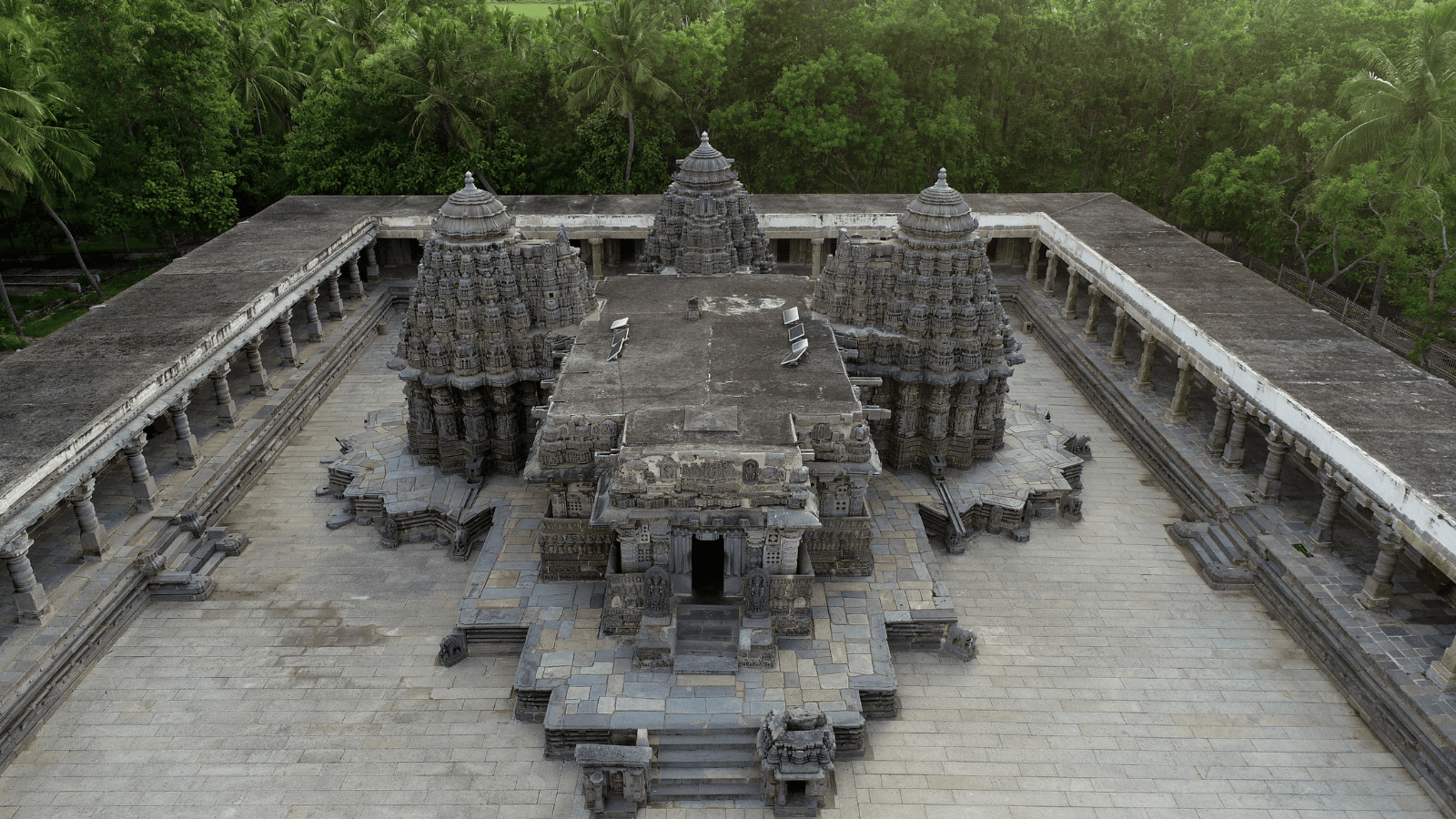
The Keshava Temple at Somanathapura is regarded as the most refined example of Hoysala architecture. Its carefully sculpted form, set within a well protected courtyard, presents a harmonious combination of artistry and engineering that reflects the maturity of the Hoysala tradition.


Historical Background


Dedicated to Vishnu, the monument was created during a period of heightened temple construction in the 13th century C.E. The temple has three sanctums situated on the west, north, and south, each linked to a common pillared hall. Iconographically, the sanctums enshrine Keshava, Venugopala, and Janardana, illustrating the rich devotional character of the site and its association with regional Vaishnava traditions.


Location and Significance


Situated in the historic landscape of Karnataka, the temple stands as a cultural landmark demonstrating the exceptional craftsmanship of Hoysala sculptors. The presence of named artisans, including the distinguished Mallitamma, reinforces its importance within the architectural heritage of southern India.


Architectural Materials and Design


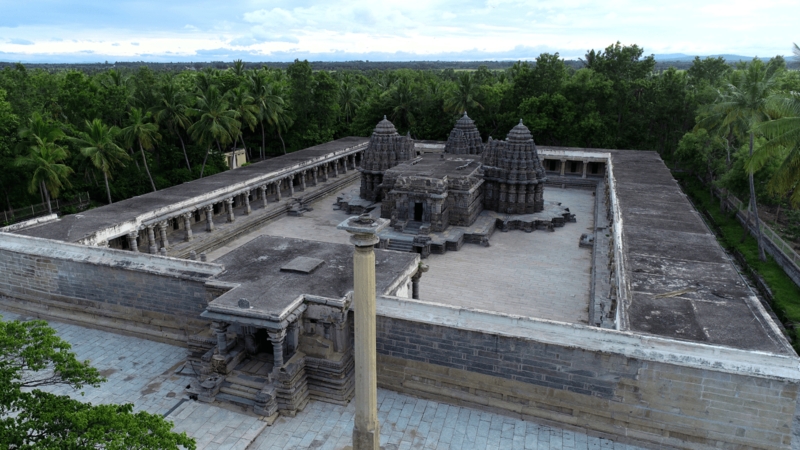
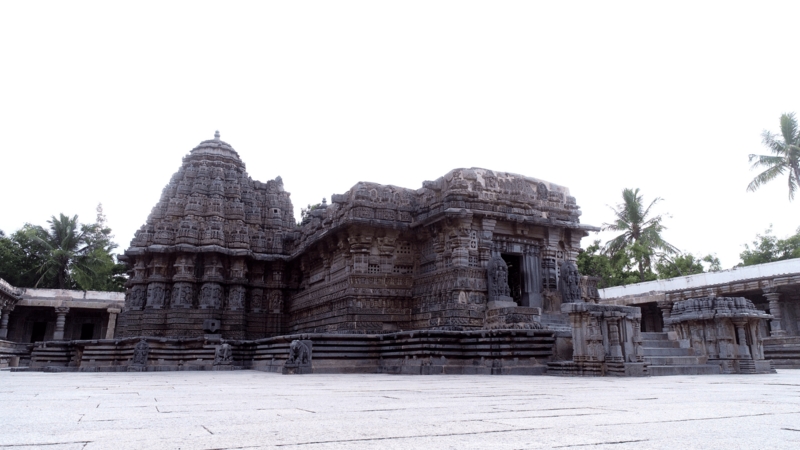
The temple rests on a stellate platform and is enclosed by pillared corridors with subsidiary shrines. Elaborately carved ceilings, refined doorframes, and exquisitely detailed exterior walls display images of deities and decorative motifs rendered with precision. The careful placement of sculptures and the rhythmic articulation of surfaces exemplify the hallmark qualities of Hoysala design.

Things to know
icon
Ticket needed for all ages
icon
Entry allowed for all ages
icon
Kid friendly
icon
Pets not allowed
icon
Washrooms available
icon
Free water stations

What visitors say

star4.8|platform
From 100 Google reviews
Author AvatarManohara Mukunda
9 months ago
Date Taken: 24-Dec-2011 and 22-Feb-2020 Somanathapur the place, which was earlier under the rule of the Cholas, was conquered by Hoysala Vishnuvardhana in A.D. 1117. Later it was ruled by the Vijayanagara kings and Wodeyars of Mysore. It became one of the foremost agrahara townships during the rule of Narasimha III. An inscription dated A.D. 1268 records that Somanatha Dandanayaka, an illustrious general of the Hoysala king Narasimha III, established an agrahara in Somanathapur and named it as “Vidyanidhi Prasanna Somanathapura” and consecrated the temple of Kesava. The temple is the most ornate and perfect model of the Hoysala style of architecture. The temple facing east has three garbhagrihas on the west, north and south, all connected to a common pillared hall through a separate sukanasi. The western sanctum houses the image of Vishnu as Kesava. The southern has the image of Venugopala and the northern has image of Janardana. The temple stands on a high stellate platform, and is enclosed in a spacious courtyard surrounded by pillared corridors with sub-shrines. The temple is known for elaborately carved doorways, and beautifully executed ceilings of the navaranga mandapa. The friezes of the basement, beautiful images of deities adorning the exterior wall surfaces with names of sculptors who carved them like Mallitamma, the highly decorated and beautifully proportioned superstructure resting on the three sanctums, known for their poise and elegance render the Keshava temple a perfect model of the trikuta style. #Somanathapur #KeshavaTemple #KarnatakaTourism #TempleArchitecture #IndianHeritage #CulturalTourism #IncredibleIndiaRead More
Author AvatarSonam Baranwal
8 months ago
Around 800 years old temple still rising and shining 🤩 Beautiful intricate designs.. 😍 awesome architectural beauty 😊 Must visit to experience the rich history of our nation ☺️Read More
Author AvatarSourish Dey
1 year ago
The Chennakesava Temple, also referred to as Chennakeshava Temple and Keshava Temple, is a Vaishnava Hindu temple on the banks of River Kaveri at Somanathapura, Mysuru, Karnataka, India.The temple was consecrated in 1258 CE by Somanatha Dandanayaka, a general of the Hoysala King Narasimha III. It is located 38 kilometres (24 mi) east of Mysuru city.[3][note 1] The ornate temple is a model illustration of the Hoysala architecture. The temple is enclosed in a courtyard with a pillared corridor of small shrines (damaged). The main temple in the center is on a high star-shaped platform with three symmetrical sanctums (garbha-griha), set in a square matrix (89' x 89') oriented along the east–west and north–south axes.[4] The western sanctum was for a statue of Kesava (missing), the northern sanctum of Janardhana and the southern sanctum of Venugopala, all forms of Vishnu.[5] The sanctums share a common community hall (sabha-mandapa) with many pillars. The outer walls, the inner walls, the pillars and the ceiling of the temple are intricately carved with theological iconography of Hinduism and display extensive friezes of Hindu texts such as the Ramayana (southern section), the Mahabharata (northern section) and the Bhagavata Purana (western section of the main temple).[1] The Chennakesava temple, states author George Michell, represents the climax of the development in Hoysala temple style and yet is also unique in many ways.[6] In 2023, the Somanathapura temple, along with the Hoysaleswara Temple at Halebidu and the Chennakeshava Temple at Belur, was declared a World Heritage Site by UNESCO as part of the Sacred Ensembles of the Hoysalas.[7] The Somanathapura town was founded in the 13th century by a general named Somanatha (Someya Dandanayaka in some inscriptions). He was working for the Hoysala King Narasimha III.[8][9] Somanatha created an Agrahara, that is granted land to Brahmins and dedicated resources to build and maintain temples therein.[9] The town (pura) became known after the name of the patron, Somanatha-pura. The location is also referred by alternate spellings, such as Somnathpur.[6] In the middle of the new settlement, Somanatha built the Kesava temple and consecrated it in 1258 CE.[8][note 1] This was a Vaishnavism tradition temple. In addition to this temple, Somanatha consecrated a Shaivism tradition related Panchalinga temple (literally, "five linga temple") in the east-northeast corner of the land grant. He also built a fort wall around the land, but these are now in ruins.[8][9] According to the inscriptions and textual evidence, Somanatha additionally built the Purahara, Narasimhesvara, Murahara, Lakshminarasimha and Yoganarayana temples in Hoysala style in the region, but all these temples except the Lakshminarasimha have disappeared, after wars between the Hindu kingdoms and Muslim Sultanates ravaged the region. The Lakshminarasimha temple is also in ruins. From the other disappeared temples, the sanctum image of Yoganarayana temple is only known surviving artwork, but it too is in a damaged form.[8][10][11] The Kesava temple too was badly damaged, according to 15th-century inscriptions. It was repaired in the 16th century with financial support and grants by the emperors of the Vijayanagara Empire.[12] The repairs are evidenced by the different color of stones and quality of work in the veranda and parts of the northern tower and platform of the main temple. The repaired temple was damaged in the 19th century, then repaired again in the early 20th century by the colonial era Mysore government.[12] The Kesava temple is one of some 1,500 Hindu and Jain temples built by the Hoysala Empire kings in different parts of their kingdom. The other well studied Hoysala temples include those at Belur and Halebidu.[13] The temple was destroyed during Muslim attacks in the Hoysala kingdoms. The first attack was by Malik Kafur, Alauddin Khilji's general in 1311 and in 1326 Muhammad Bin Tughlaq destroyed the remaining structures. Some parts of the temples were restoredRead More
Author AvatarRamakrishnan Rathinavel
3 years ago
We visited the Keshava temple in Somanathapura,Mysore. The architecture of this temple is simply breathtaking. The sculptures might have been created with huge effort. The maintenance of this temple can be a little better so that it will remain for the future generations. The atmosphere in and around the temple was neat and clean. They have decent car parking outside the temple. Also, they charge 20 Rs as an entrance ticket which needs to be paid online. You should definitely visit this temple when you get a chance.Read More
Author AvatarAsh
2 years ago
This is a beautiful place of architectural importance fully made of stones. The entry to this temple is through online tickets that can be taken by scanning a QR code just beside the Gate. The premises and the temple are kept clean and beautiful. While we visited the place it was bit crowded but that doesn’t spoils the beauty of the temple. The toilet facilities are available inside the compound and it was so clean. Also parking is available outside the temple with a parking fee of Rs 50 for 🚘.Read More
Organized by
brand-img
Archaeological Survey of India
91%liked
164events
11 monthshosting
More
Frequently asked questions
Terms and Conditions
₹20
onwards